
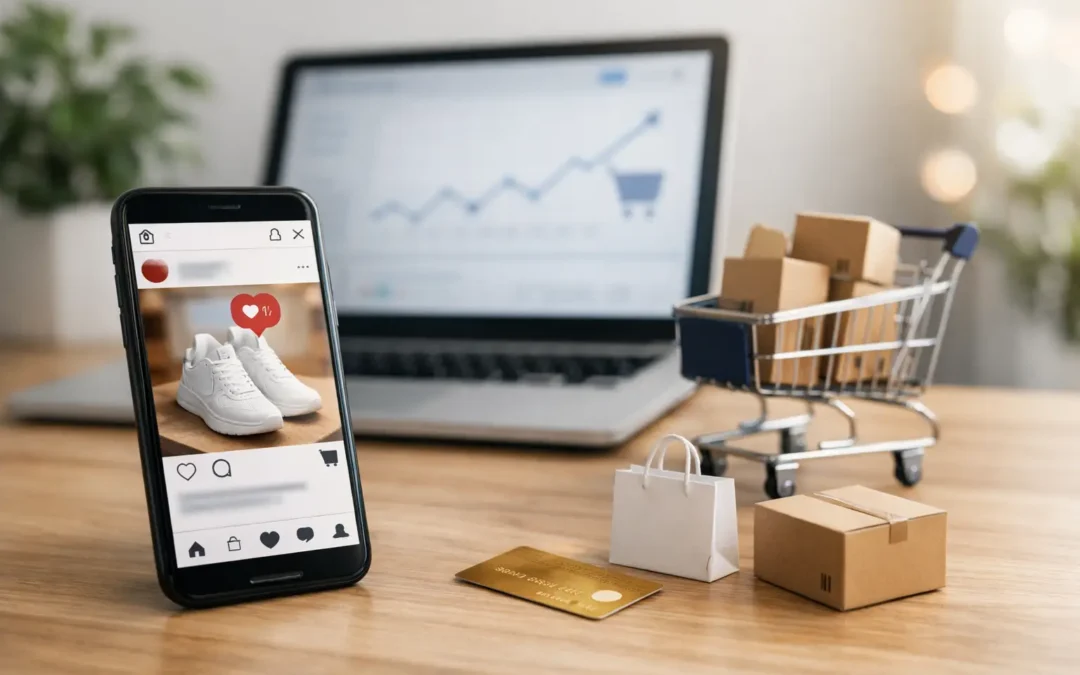
Selling on Instagram looks easy until the numbers tell a different story. Plenty of ecommerce brands can generate clicks, views, and add-to-carts, yet still struggle to turn paid traffic into profitable revenue. That is where instagram ads for ecommerce sales stop being a creative exercise and start becoming a performance system.
For most online stores, Instagram works best when it is treated as part of the full buying journey, not just a place to run attractive visuals. The ad has to catch attention, the offer has to make sense, the product page has to load fast, and the checkout has to feel frictionless. If one part fails, the campaign underperforms no matter how polished the creative looks.
Why instagram ads for ecommerce sales work
Instagram remains one of the strongest paid channels for product discovery. People open the app expecting to browse, compare, save ideas, and make impulse decisions. That behavior matters for ecommerce because it shortens the gap between seeing a product and wanting it.
What makes Instagram especially effective is the combination of visual storytelling and precise targeting. A strong product can be shown in use, styled in context, or framed around a problem it solves. At the same time, campaigns can be shaped around interest signals, remarketing audiences, and lookalike segments that help reduce wasted spend.
That said, not every store sees the same return. Lower-priced impulse products often perform faster than high-consideration items. Fashion, beauty, home goods, fitness, and lifestyle categories usually have a natural advantage because the platform rewards visual appeal. More technical or expensive products can still work, but they usually need stronger education, better social proof, and longer retargeting cycles.
Start with the sales objective, not the ad format
A common mistake is choosing ad types based on what looks good in the feed. Carousels, Reels, story ads, and collection ads all have their place, but format should follow business intent.
If you need first-time purchases, prospecting campaigns should focus on introducing the product clearly and quickly. If you already have traffic but weak conversion rates, retargeting ads should address hesitation. If repeat customers matter to your margin, you need campaigns built around replenishment, bundles, or new arrivals instead of generic promotions.
This sounds obvious, but many ecommerce accounts blend every message into one campaign and expect the algorithm to sort it out. Usually it does not. Better results come from matching campaign structure to the stage of the customer journey.
What makes Instagram ecommerce ads convert
Creative still matters, but not in the way many brands assume. The best-performing ads are rarely the most polished. They are the clearest. They show the product fast, explain the value quickly, and remove doubt before the click.
A strong ecommerce ad usually does three things within seconds. It shows what the product is, who it is for, and why it is worth attention now. If the user has to work too hard to understand the offer, performance drops.
Creative that sells, not just attracts attention
For cold audiences, visual clarity beats design complexity. Product-in-use footage, before-and-after contrasts, close-up details, and user-generated style content often outperform static lifestyle shots with vague messaging. People do not buy because an ad feels expensive. They buy because the product feels relevant.
Messaging should stay commercially grounded. Lead with a practical benefit, a clear differentiator, or a reason to act. Claims like premium quality or best value are too broad on their own. A stronger angle might be faster setup, better fit, easier storage, cleaner ingredients, or a visible result.
Social proof helps, but only when it is specific. Instead of saying customers love it, show star ratings, repeat purchase signals, short review excerpts, or a realistic use case. Buyers trust proof they can picture.
Offers matter more than many brands admit
Even strong products can stall without a compelling offer. Discounting is one option, but it is not the only one. Free shipping thresholds, bundles, limited-time gifts, first-order incentives, or product pairings can lift conversion rates without damaging brand value.
The right offer depends on your margins and your market. If your category is highly competitive, price sensitivity may be high. If your product is differentiated, education and trust may matter more than a percentage off. The point is to test the offer as seriously as you test the creative.
The landing page decides whether the sale happens
Many businesses blame ad performance when the actual problem sits on the product page. Instagram can generate demand, but the store has to close it.
If someone clicks from an ad and lands on a slow, cluttered, or confusing page, the campaign will bleed budget. The page should match the ad message immediately. Product title, imagery, pricing, variants, reviews, shipping details, and add-to-cart action should be visible without friction.
Mobile performance is especially important because most Instagram traffic comes from phones. A page that feels acceptable on desktop can still lose sales on mobile if image sizes are heavy, buttons are awkward, or checkout requires too many steps. This is where brands often underestimate the connection between paid media and site infrastructure.
For ecommerce businesses that want stronger returns, ad strategy and website performance cannot be treated as separate projects. A faster store, clearer product page layout, and tighter checkout flow often improve return on ad spend more than another round of creative edits.
How to structure instagram ads for ecommerce sales
A practical campaign structure usually starts with three layers: prospecting, retargeting, and retention. This keeps budget aligned with intent instead of asking one campaign to do everything.
Prospecting introduces the product to new audiences through interest targeting, broad targeting, or lookalikes based on purchasers and engaged visitors. The goal here is not just traffic. It is qualified traffic with a realistic chance of buying.
Retargeting focuses on users who viewed products, added items to cart, engaged with Instagram content, or visited the site recently. This is where reminder ads, testimonials, urgency, and offer-driven creative tend to work well. These audiences already know the brand, so the message should move them closer to the transaction.
Retention is often the overlooked layer. Existing customers are usually cheaper to convert and more likely to increase lifetime value. Ads for accessories, upgrades, new drops, or reorder cycles can turn Instagram into a repeat revenue channel instead of a one-time acquisition tool.
Budget, testing, and realistic expectations
Most ecommerce advertisers do not need a massive budget to start, but they do need enough data to make decisions. Running too many audiences, too many creatives, and too many objectives at once spreads budget thin and delays learning.
A cleaner approach is to test one variable at a time. Start with a controlled set of creative angles, a clear audience strategy, and a landing page that is already conversion-ready. Once you have early data, optimize based on what actually drives purchases, not what gets cheap engagement.
This is where discipline matters. A campaign with a high click-through rate can still be unprofitable. A video with strong watch time can still produce weak sales. Ecommerce decisions should be tied to metrics such as cost per purchase, return on ad spend, average order value, and conversion rate by audience segment.
It also helps to account for timing. Some products convert quickly, while others need repeated exposure. Seasonality, pricing, competition, and purchase frequency all affect performance. If your product has a longer consideration cycle, judging a campaign too early can lead to bad decisions.
Common reasons Instagram ads underperform
When instagram ads for ecommerce sales fail, the issue usually comes down to one of a few gaps. The product may not have enough market demand. The creative may attract the wrong audience. The offer may be weak. The landing page may not support the buying decision. Or the campaign may be optimized around the wrong objective.
Tracking issues also create confusion. If purchase events are misconfigured or attribution is incomplete, businesses can misread what is working and cut campaigns that are actually contributing to revenue. Reliable measurement is not optional when ad spend is tied directly to growth targets.
Another common issue is inconsistency across the funnel. An ad may promise one thing while the product page emphasizes something else. The design might look modern, but the message lacks clarity. The campaign might generate volume, but the site experience wastes it. Good performance usually comes from alignment, not isolated improvements.
Where ecommerce brands gain an edge
The brands that win with Instagram ads are not always the biggest spenders. They are usually the ones with tighter fundamentals. They know their best-selling products, understand what buyers hesitate over, test offers with discipline, and build pages that support conversion instead of distracting from it.
That is why integrated execution matters. Creative, paid media, landing page speed, and conversion design should work together. Rebrand Malaysia approaches digital growth with that same commercial logic because ad performance improves when the full customer journey is built to convert, not just the campaign itself.
If you are investing in Instagram and expecting ecommerce sales to scale, treat every click as expensive and every conversion as engineered. Better results usually come from fixing the journey, not just increasing the budget.
Instagram Ads for Ecommerce Sales Frequently Asked Questions
This FAQ covers the most common questions about Instagram Ads for Ecommerce Sales. Last Updated: 1 July 2026
Why does Instagram work for ecommerce sales?
Instagram remains one of the strongest paid channels for product discovery because users open the app expecting to browse, compare, and make impulse decisions. The platform’s combination of visual storytelling and precise targeting—through interest signals, remarketing, and lookalike segments—helps reduce wasted spend and shortens the gap between seeing a product and wanting it.
- Users browse with intent to discover and compare products
- Visual storytelling showcases products in use and in context
- Targeting options reduce spend on irrelevant audiences
Lower-priced impulse products often perform faster than high-consideration items. Fashion, beauty, home goods, fitness, and lifestyle categories have natural advantages on the platform.
Explore our Instagram advertising services
What makes Instagram ecommerce ads convert better?
The best-performing Instagram ecommerce ads are the clearest, not the most polished. Strong ads show the product fast, explain the value quickly, and remove doubt before the click by demonstrating what the product is, who it is for, and why it deserves attention now.
- Product-in-use footage often outperforms static lifestyle shots
- Before-and-after contrasts and close-up details drive clarity
- Visual clarity beats design complexity for cold audiences
- User-generated content and realistic use cases build trust
Messaging should lead with practical benefits, clear differentiators, or reasons to act rather than vague claims like ‘premium quality’ or ‘best value.’
Learn more about our creative strategy
How should I structure Instagram ad campaigns for ecommerce?
Campaign structure should match the stage of the customer journey rather than ad format preference. Prospecting campaigns should introduce products clearly for first-time buyers, retargeting ads should address hesitation for warm traffic, and repeat-customer campaigns should focus on replenishment, bundles, or new arrivals instead of generic promotions.
- Prospecting campaigns introduce products to cold audiences
- Retargeting addresses objections for warm prospects
- Repeat-customer campaigns promote bundles and new arrivals
- Structure follows business intent, not aesthetic preference
Blending every message into one campaign and expecting the algorithm to sort it out usually does not work. Better results come from separating campaigns by audience stage and intent.
View our campaign strategy framework
What role does the offer play in Instagram ecommerce ad performance?
Offers matter more than many brands admit and should be tested as seriously as creative. Beyond discounting, free shipping thresholds, bundles, limited-time gifts, first-order incentives, and product pairings can lift conversion rates without damaging brand value depending on your margins and market competitiveness.
- Discounts are one option but not the only strategy
- Free shipping and bundled offers can drive conversion
- Limited-time gifts create urgency
- Product pairings increase average order value
If your category is highly competitive, price sensitivity may be high. If your product is differentiated, education and trust may matter more than a percentage discount.
Discuss offer optimization with our team
Why do landing pages affect Instagram ad performance?
The landing page is where the sale actually happens. If someone clicks from an ad and lands on a slow, cluttered, or confusing page, the campaign will bleed budget. The page should match the ad message immediately so that product title, imagery, pricing, and variants align with what the ad promised.
- Page load speed directly impacts conversion rates
- Message alignment between ad and page is critical
- Product title, imagery, and pricing must match ad claims
- Cluttered layouts cause budget waste despite strong ads
Many businesses blame ad performance when the actual problem sits on the product page. Instagram generates demand, but the store must close it.
Optimize your product page experience
What type of social proof works best in Instagram ecommerce ads?
Specific social proof outperforms generic claims. Star ratings, repeat purchase signals, short review excerpts, and realistic use cases build more trust than vague statements like ‘customers love it’ because buyers trust proof they can picture.
- Star ratings are concrete and credible
- Repeat purchase signals indicate satisfaction
- Review excerpts provide authentic voices
- Realistic use cases help buyers envision the product
Social proof helps conversion, but only when specific and picture-able rather than broad and aspirational.
Review our social proof strategy

- Branding Transformation Example for SME Growth - August 11, 2026
- Corporate Website Content Planning Guide - August 10, 2026
- Website Trust Signals Checklist for More Leads - August 9, 2026