
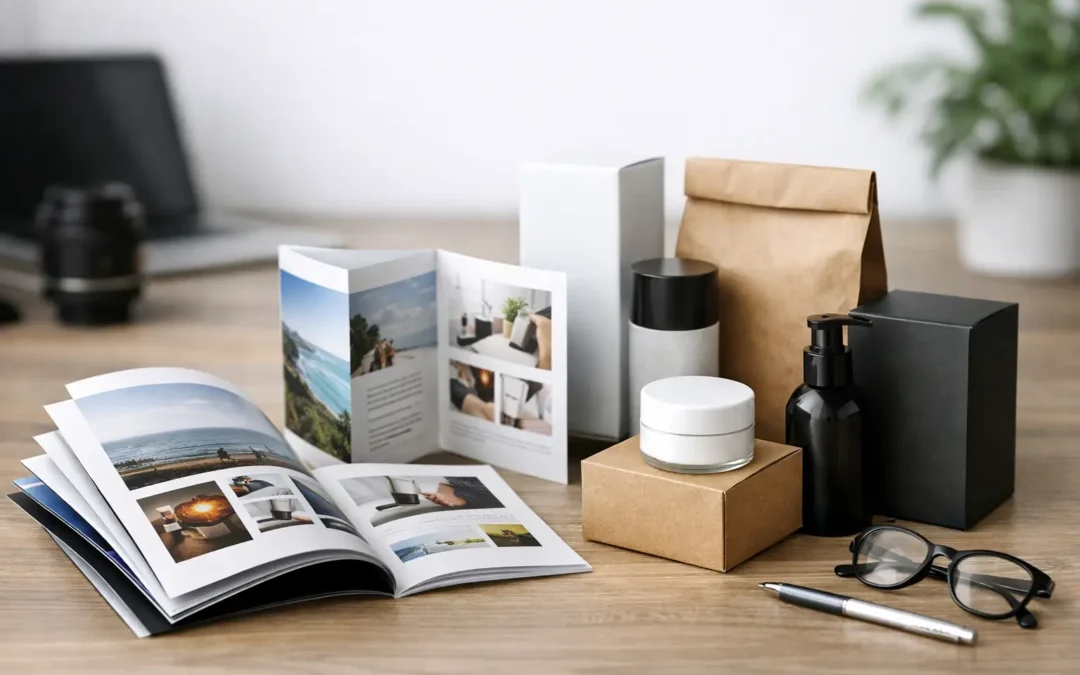
A product can be excellent and still lose the sale if the brochure feels generic or the packaging looks like an afterthought. Buyers make fast judgments. In crowded categories, brochure and packaging design services are not just about presentation. They influence credibility, attention, and whether someone takes the next step.
For businesses trying to grow, that matters more than most teams expect. A brochure often works as a sales tool long after a meeting ends. Packaging does the same work in a different setting. It has to stop the eye, communicate value quickly, and support the brand promise without creating confusion. When both are designed with commercial goals in mind, they do more than look polished. They help move prospects closer to purchase.
Why brochure and packaging design services matter
Brochures and packaging sit at the point where brand perception meets buyer behavior. That is why weak design creates more damage than just visual inconsistency. It can dilute positioning, lower trust, and make a legitimate business look less established than it really is.
A brochure has a specific job. It should help a prospect understand what you offer, why it is relevant, and what action to take next. If the layout is cluttered, the copy is vague, or the hierarchy is unclear, the material fails before the reader gets to the important part. The same logic applies to packaging. If the front panel does not communicate what the product is, who it is for, and why it is worth attention, the design is working against the sale.
Good design does not mean overdesigned. In fact, many businesses hurt performance by trying to fit too much into one piece. Better brochure and packaging design services focus on clarity first, then persuasion, then brand expression. That order matters.
What effective brochure design actually needs
A brochure is often treated as a brand asset. It is also a sales asset. The strongest brochure designs balance those two functions without forcing the reader to work too hard.
The first requirement is structure. People scan before they read. That means headlines, subheads, spacing, image placement, and calls to action have to guide attention naturally. A brochure should not feel like a wall of information. It should create a path through the content.
The second requirement is message discipline. Many brochures try to speak to everyone and end up connecting with no one. If your business serves multiple markets, it is usually smarter to create separate versions than to stuff every service into one piece. A brochure for investors, distributors, and end customers should not read the same way.
The third requirement is consistency with the wider brand. Fonts, colors, imagery, and tone should align with your website, ads, sales decks, and product materials. When those elements are disconnected, businesses lose momentum. Prospects notice inconsistency, even if they do not say it out loud.
There is also a practical layer that gets overlooked. Print specifications, fold formats, paper stock, finishing, and file setup all affect the final result. A great-looking digital mockup can fail badly in production if the design was not built for real-world printing conditions.
What packaging design needs to do beyond looking good
Packaging carries more pressure because it often has to persuade without a salesperson in the room. That makes every element work harder.
At a glance, the design needs to establish recognition. That includes brand name visibility, product identification, and a clear visual cue for category or use case. If a consumer has to stop and decode what the product is, you have already lost time you may not get back.
Next comes differentiation. Shelf presence is not just about bright colors or bigger logos. Sometimes the right move is to be louder than competitors. Sometimes it is to look more premium, more restrained, or more trustworthy. The right decision depends on the market, price point, and buying context.
Then there is information hierarchy. Packaging usually needs to handle regulatory details, ingredients, usage instructions, claims, and selling points within limited space. That creates trade-offs. If everything is emphasized, nothing stands out. Strong packaging design prioritizes what the buyer needs first and places supporting details where they can still be found easily.
Function matters too. Packaging has to survive shipping, storage, handling, and display. A beautiful box that dents easily or a label that becomes hard to read under store lighting creates avoidable friction. Design and practicality have to be solved together.
Brochure and packaging design services should support sales, not just aesthetics
This is where many businesses choose the wrong partner. They hire for taste instead of business impact.
A commercially useful design process starts with questions about audience, positioning, margins, sales channels, and competition. If your product sells through retail, marketplace listings, direct response campaigns, and distributor networks, your collateral should reflect those realities. The design should fit how your business actually wins customers.
For example, a premium skincare brand may need packaging that signals quality in-store while also photographing well for ads and e-commerce listings. A B2B manufacturer may need a brochure that sales teams can use in meetings, trade shows, and follow-up emails without rewriting the pitch each time. The design brief changes when revenue goals are clear.
That is why strategy matters before visuals. The best creative decisions are usually the result of strong commercial thinking, not isolated inspiration.
How to evaluate brochure and packaging design services
Not every design provider works at the same level. Some can produce attractive layouts but struggle with positioning. Others understand branding but ignore conversion. For a business owner or marketing manager, the better question is not whether the work looks nice. It is whether the service can support outcomes.
Look at how the provider approaches discovery. Do they ask about target audience, price point, competitors, distribution channel, and business goals? If the process starts and ends with logo files and color preferences, the result will likely be shallow.
Review whether they understand both print and digital use. A brochure may be printed, downloaded as a PDF, presented in meetings, or adapted into a landing page. Packaging may need to work on shelf, in social content, and on product listing images. A design team that thinks across channels creates stronger continuity.
It also helps to assess whether they can maintain consistency across assets. When brochures, packaging, websites, and ad creatives all feel related, the brand becomes easier to trust. That matters for growing companies that want a sharper market presence without managing multiple disconnected vendors.
This is one reason businesses work with agencies like Rebrand Malaysia. The value is not just execution. It is having design decisions shaped by branding, digital visibility, and conversion goals at the same time.
Common mistakes that weaken results
The most common mistake is trying to say too much. Businesses often want every feature, every certification, every product variant, and every message included at once. The result is a crowded brochure or packaging design that feels busy and forgettable.
Another mistake is designing without context. A brochure for a luxury property developer should not look like one for an industrial supplier. Packaging for a value-priced consumer product should not copy the visual language of a premium boutique brand unless that mismatch is intentional and strategically sound.
There is also the problem of internal preference overruling customer logic. Teams may choose colors, visuals, or messaging because they personally like them, even when the choices do not support shopper behavior or market expectations. Good design services push back when needed.
Finally, many businesses treat design as a one-time task. In reality, brochures and packaging often need updates as products expand, regulations change, or customer feedback reveals confusion. The strongest assets improve over time.
When custom design is worth the investment
Custom work makes the biggest difference when your business competes on trust, category distinction, or perceived value. If your offering is easy to compare and buyers have many alternatives, generic materials make it harder to justify your pricing.
That said, not every company needs the same level of complexity. A startup launching one product may need focused packaging and a simple sales brochure. A growing company with multiple product lines and channel partners may need a broader system with version control, templated layouts, and long-term brand governance. It depends on scale, speed, and how often the assets will be used.
The right investment is the one that reduces friction in the sales process. If better packaging increases pickup rates, supports premium pricing, or improves digital presentation, it pays for itself differently than a brochure that shortens sales conversations or helps a rep close meetings more effectively. Both matter. They just create return in different ways.
Strong brochure and packaging design is not decoration for the business. It is part of how the business sells, earns trust, and competes in markets where attention is short and first impressions carry real weight. If your materials are underperforming, the fix may not be more promotion. It may be better design that gives people a clearer reason to choose you.
Brochure & Packaging Design Services Frequently Asked Questions
This FAQ covers the most common questions about Brochure & Packaging Design Services. Last Updated: 1 July 2026
What is the purpose of brochure and packaging design services?
Brochure and packaging design services create materials that influence buyer perception, establish credibility, and move prospects closer to purchase. Both serve as sales tools that communicate product value quickly and support brand positioning in competitive markets. Strong design prevents positioning dilution and builds trust.
- Brochures guide prospects through understanding what you offer and what action to take next
- Packaging must stop buyer attention at point of sale without a salesperson present
- Both must balance brand consistency with clear, persuasive messaging
Weak design in either channel can damage credibility and reduce sales momentum, even if the underlying product is excellent.
Explore our brochure and packaging design services
Why do brochures and packaging affect buyer behavior?
Brochures and packaging sit at the intersection of brand perception and buyer decision-making. They communicate product relevance, build trust, and influence whether a buyer takes the next step. Inconsistent or cluttered design reduces perceived professionalism and can dilute brand positioning before the reader engages with core messaging.
- Poor layout, vague copy, or unclear hierarchy causes materials to fail before reaching important content
- Visual inconsistency across channels damages buyer confidence
- Fast judgments happen before detailed reading, so design hierarchy must guide attention immediately
Learn how design impacts your sales
What are the key requirements for effective brochure design?
Effective brochure design requires three core elements: clear structure that guides attention naturally, message discipline that speaks to a specific audience rather than everyone, and consistency with wider brand assets. Structure means using headlines, spacing, and calls to action to create a path through content rather than overwhelming readers with information density.
- Structure guides scanning and reading through headline hierarchy and image placement
- Message discipline may require separate versions for investors, distributors, and end customers
- Consistency with website, ads, sales decks, and product materials builds momentum across channels
- Print specifications, fold formats, and paper stock affect final production quality
Many brochures fail because they try to fit too much content into one piece or because design work is not built for real-world printing conditions.
Review our brochure design approach
How should packaging design balance information with visual impact?
Packaging design must prioritize information hierarchy to handle regulatory details, ingredients, and selling points within limited space. Front panel focus should establish brand recognition and product identification first, then differentiation that reflects market positioning and price point. Supporting details follow where they remain easily found, preventing information overload.
- Brand name and product identification must be immediately visible
- Differentiation strategy depends on market, price point, and competitive context
- Information hierarchy prevents emphasizing everything, which causes nothing to stand out
- Function and durability must be solved alongside aesthetics
Beautiful packaging that dents during shipping or becomes hard to read under store lighting creates friction and loses sales potential.
Discover our packaging design process
How does shelf presence influence packaging design decisions?
Shelf presence is not determined by bright colors or larger logos alone. The right approach depends on whether the brand should stand out as louder than competitors, appear more premium and restrained, or project trustworthiness. Design decisions must reflect market positioning, category visibility, and the buying context where the product competes.
- Visual strategy changes based on product category and competitive landscape
- Sometimes restrained design builds more trust than bold designs
- Price point influences whether to emphasize premium positioning or value
The goal is category recognition and differentiation within the specific retail or marketplace environment where customers make purchase decisions.
Understand shelf presence strategy
Why should brochure and packaging design focus on business impact rather than aesthetics alone?
Design services focused purely on taste without business strategy often fail to drive sales results. Commercially useful design processes start by analyzing audience, positioning, margins, sales channels, and competition. This ensures brochures and packaging directly support revenue goals rather than simply looking polished.
- Questions about audience and positioning guide design direction
- Sales channel analysis informs format and distribution strategy
- Competitive analysis shapes differentiation approach
- Margin considerations influence material and production choices
Hiring for business impact requires partners who balance creative excellence with sales accountability.
Talk to us about results-driven design

- Branding Transformation Example for SME Growth - August 11, 2026
- Corporate Website Content Planning Guide - August 10, 2026
- Website Trust Signals Checklist for More Leads - August 9, 2026