
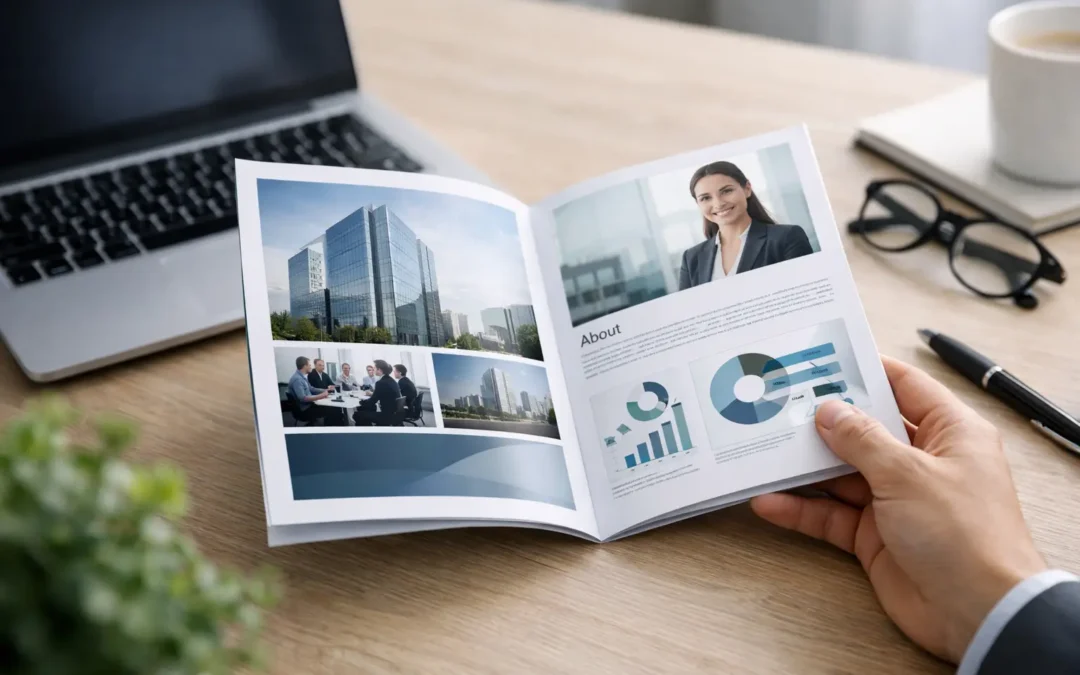
A weak company profile does more damage than most businesses realize. It gets sent to prospects, partners, investors, distributors, and event organizers, then quietly shapes whether your company looks credible, capable, and worth a follow-up. That is why a professional company profile design service is not just about layout. It is about giving your business a sharper sales tool.
For many small and mid-sized companies, the profile sits in an awkward middle ground. It is not quite a brochure, not quite a pitch deck, and not quite a website. But it often does the work of all three. When done well, it helps people understand what you do, why you are different, and whether they should trust you with their time or budget.
What a company profile design service should actually do
A lot of businesses assume design is the main value. Good design matters, but that is only one part of the job. A strong company profile design service should clarify your positioning, organize your message, and package it in a format that feels credible and easy to absorb.
That means the service should go beyond choosing fonts, colors, and page layouts. It should shape the story your business is telling. If your profile looks polished but says generic things like “high quality,” “trusted,” and “customer-focused” without proof, it will not move decisions forward. Buyers have seen that language too many times.
A useful profile answers practical questions fast. Who are you? What do you do? Who do you serve? What results or strengths make you a safer choice than the next option? If those answers are buried under oversized visuals or vague copy, the document may look modern but still underperform.
Why businesses invest in company profile design service work
Most companies do not redesign their profile because they are bored with the old one. They do it because something in the business has changed, or because the existing profile is costing them opportunities.
Sometimes the company has grown and the old document no longer reflects its capabilities. Sometimes the branding is inconsistent across the website, sales deck, and marketing materials. In other cases, the profile was built internally by someone doing their best in PowerPoint, and now it looks out of step with the level of business the company wants to win.
There is also a performance reason. A better profile can support faster sales conversations, cleaner presentations, and stronger first impressions. It can help your team explain the business consistently instead of improvising every time they send a PDF to a prospect.
For startups, the need is slightly different. The profile often needs to create trust before the company has years of case studies or a long operating history. In that case, structure, messaging, and visual credibility carry more weight. For established businesses, the focus may be on refining a crowded message into something easier for decision-makers to understand.
The difference between a good-looking profile and one that works
This is where many projects go off track. A visually attractive profile can still be weak if it does not support a business goal. A profile that works has a job to do.
In some companies, that job is lead conversion. In others, it is partnership outreach, investor communication, tender support, distributor onboarding, or corporate positioning. The right design approach depends on that use case.
If your profile is mainly used by the sales team, it needs sharper messaging, stronger proof points, and a structure that gets to value quickly. If it is used for corporate introductions, it may need a broader view of the business, leadership, capabilities, and market presence. If it is sent after inbound inquiries, it should reinforce confidence without overwhelming the reader.
This is why templates only go so far. They can make a document look cleaner, but they cannot decide what matters most to your audience. A proper service should help you make those decisions.
What to expect from a serious company profile design service
A credible provider should start by understanding your business model, audience, and use case. Without that, the work becomes decoration.
The process usually includes content planning, copy refinement, visual direction, and final layout production. Some businesses already have usable copy and brand assets. Others need help writing the profile from scratch. That is an important distinction because design quality often depends on content quality.
You should expect discussion around your positioning, service categories, differentiators, and proof. That proof might include client sectors, project highlights, certifications, milestones, team strength, or measurable outcomes. The best profiles do not simply describe the business. They support belief.
At the design stage, consistency matters more than visual noise. Typography, spacing, icon style, imagery, charts, and brand colors should all support readability. A company profile is not a social media ad. It does not need to shout. It needs to look controlled, credible, and commercially clear.
Common mistakes that weaken company profiles
One of the biggest mistakes is trying to say everything. Businesses often pack in too much history, too many service details, and too many filler claims. The result is a long document that nobody finishes.
Another problem is writing from the company’s perspective only. A profile should describe your business, but it should still connect to what the audience cares about. That could be speed, reliability, scale, compliance, cost control, innovation, or responsiveness. If the document talks only about your internal pride points, it may miss the buyer’s actual concerns.
Weak hierarchy is another issue. If every page looks equally important, readers do not know where to focus. Good design creates direction. It helps the eye move through the message in the right order.
Outdated visuals also hurt trust. Low-resolution images, inconsistent logos, old screenshots, or mismatched brand styling suggest a business that is not paying attention. That may sound harsh, but decision-makers notice these signals quickly.
How company profile design supports sales and brand growth
A company profile often enters the conversation before a meeting does. It may be forwarded internally from one decision-maker to another. It may be reviewed by procurement teams, executives, or partners who have never visited your website. In that moment, the profile is doing brand work and sales work at the same time.
That is why it should align with your broader digital presence. If your website says one thing, your ad messaging says another, and your company profile uses outdated positioning, you create friction. A consistent profile strengthens your presentation across channels and helps your team show up with more authority.
This is also where an integrated agency can add more value. A team that understands branding, content, and conversion can build a profile that looks right and sells the right story. That matters when your business needs every marketing asset to pull its weight, not just fill a folder.
Choosing the right service provider
Price matters, but it should not be the first filter. The cheaper option often relies on surface-level design and minimal strategic input. That may be enough if your content is already strong and your needs are simple. But if your positioning is unclear, your messaging is dated, or your materials are inconsistent, a low-cost execution-only approach can leave the real problem untouched.
Ask how the provider handles content. Ask whether they help structure the narrative, refine the copy, and tailor the profile to your business goals. Ask what formats you will receive and how easily the profile can be updated later. A polished PDF is useful, but flexibility matters too.
It also helps to look for commercial thinking. The right partner should understand that the profile is not just a branding asset. It is a credibility tool, a sales support document, and in some cases a shortcut to better conversations. That is the standard growth-focused businesses should expect.
At Rebrand Malaysia, that is typically the difference between design that fills space and design that moves business forward.
When it is time to redesign your company profile
If your profile no longer reflects your current services, market position, or visual identity, it is time. The same applies if your team avoids sending it because they know it is weak.
A redesign also makes sense when your website has been updated but your supporting materials still look disconnected. The more your business grows, the more costly those inconsistencies become. Prospects may not always mention them, but they shape perception all the same.
The right company profile design service gives your business a cleaner, more persuasive way to introduce itself. Not louder. Not flashier. Just clearer, sharper, and more credible where it counts.
If your company is asking for bigger opportunities, your profile should be able to stand in that room before you do.
Company Profile Design Services Frequently Asked Questions
This FAQ covers the most common questions about Company Profile Design Services. Last Updated: 1 July 2026
What is a company profile design service?
A company profile design service creates a professional document that clarifies your business positioning, organizes your core message, and packages it in a credible, easy-to-absorb format. It goes beyond layout and fonts to shape the story your business tells, helping prospects, partners, and investors quickly understand who you are, what you do, and why they should trust you.
- Clarifies positioning and organizes messaging
- Packages content in a credible, professional format
- Supports sales conversations and first impressions
- Helps teams explain the business consistently
A company profile often serves as both brochure and pitch tool, sitting between a website and pitch deck in its function.
Explore our company profile design service
Why does a company need a professional profile design service?
A professional profile design service becomes necessary when your business has changed, your existing profile is underperforming, or your messaging is inconsistent across marketing materials. It ensures your profile supports your actual business goal—whether that is lead conversion, partnership outreach, investor communication, or corporate positioning—rather than just looking visually attractive.
- Business has grown beyond what old profile reflects
- Inconsistent branding across website and sales materials
- Internally built profiles no longer match company positioning
- Need to establish trust before case studies exist (for startups)
A profile that looks polished but uses generic language like ‘high quality’ or ‘customer-focused’ without proof will not move purchasing decisions forward.
How is a good company profile different from a visually attractive one?
A profile that works serves a specific business purpose and is structured around your audience’s actual decision-making needs, while a visually attractive profile may lack clear messaging or proof points. The difference lies in strategy: understanding whether the profile supports sales conversations, partnership pitches, investor relations, or corporate introductions—then designing accordingly.
- Purpose-driven design targets a specific business goal
- Messaging and proof points support the use case
- Content quality directly impacts design effectiveness
- Structure adapts to audience type (sales team vs. corporate vs. prospects)
Templates can make a document look cleaner, but they cannot determine what matters most to your specific audience.
See how we approach profile strategy
What should a company profile design service include?
A credible company profile design service includes content planning, copy refinement, visual direction, and layout production. The process begins by understanding your business model, audience, and intended use, then moves through positioning discussion, proof point identification (such as client sectors, certifications, or measurable outcomes), and design execution focused on consistency and readability.
- Content planning and copy refinement or writing from scratch
- Discussion of positioning, services, and differentiators
- Identification of proof points (certifications, outcomes, team strength)
- Visual design with consistent typography, spacing, imagery, and brand colors
Design quality depends on content quality, so the service should address messaging strength before visual production.
Learn about our design process
Who typically uses a company profile, and does that change how it should be designed?
Company profiles are sent to prospects, partners, investors, distributors, event organizers, and internal sales teams. The design approach must change based on this use case: sales teams need sharp messaging and fast value communication, corporate introductions require broad capability overview, and post-inquiry profiles should reinforce confidence without overwhelming the reader.
- Sales team use case: sharper messaging, faster value communication
- Corporate introductions: broader business, leadership, and market view
- Investor communication: emphasis on strength and positioning
- Partnership and tender support: proof-focused, decision-ready format
A single profile may serve multiple audiences, which is why understanding primary use cases is essential.
Discuss your profile needs with us
What does it mean when a profile supports belief rather than just describes the business?
A profile that supports belief includes proof points—such as client sectors, project highlights, certifications, milestones, team strength, or measurable outcomes—rather than generic claims. This transforms the document from description into a credibility tool that answers the reader’s unspoken question: why should I trust this company over alternatives?
- Includes specific proof points instead of generic language
- Demonstrates client success and measurable outcomes
- Highlights relevant certifications and milestones
- Showcases team expertise and track record
Language like ‘high quality’ or ‘customer-focused’ without supporting evidence does not move purchasing decisions forward.

- Branding Transformation Example for SME Growth - August 11, 2026
- Corporate Website Content Planning Guide - August 10, 2026
- Website Trust Signals Checklist for More Leads - August 9, 2026