
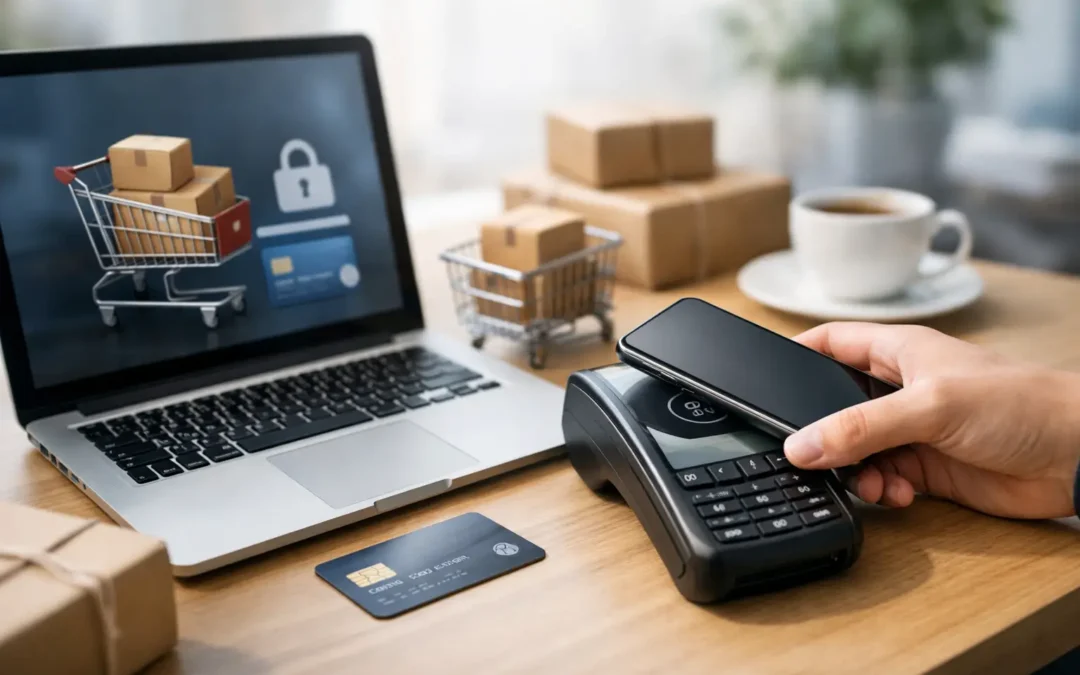
A surprising number of online stores do the hard part first – branding, product pages, ads, even SEO – then lose sales at the last step because the checkout experience feels risky, slow, or incomplete. That is why ecommerce website payment gateway setup deserves more attention than it usually gets. It is not just a technical task. It directly affects conversion rate, cart abandonment, trust, and cash flow.
For founders and marketing teams, the mistake is treating payment setup like a plugin you install at the end. In practice, the gateway influences how customers pay, how quickly you get funds, how disputes are handled, and how much revenue gets shaved off by fees. If your site is built to drive traffic but the payment flow creates friction, you are paying to send buyers into a bottleneck.
What ecommerce website payment gateway setup actually affects
Most business owners think about gateways in a narrow way. Can customers pay by card? Does it connect to the website? Is it secure? Those questions matter, but they are only the starting point.
A gateway also shapes customer confidence. If the payment page looks unfamiliar, redirects awkwardly, or offers too few payment methods, users hesitate. That hesitation is expensive. On mobile, it is even worse because every extra step increases the chance of a drop-off.
It also affects operations behind the scenes. Settlement periods influence cash flow. Fraud tools affect approval rates. Integration quality affects reporting, refunds, and how easily your team can trace failed transactions. A cheaper gateway can end up costing more if it creates support issues or low authorization rates.
Start with business fit, not features
The best gateway for one store can be the wrong choice for another. A business selling low-cost impulse products has different needs from a company handling high-ticket orders, subscriptions, or B2B invoices.
Before you compare providers, define what your checkout needs to support. Think about your average order value, expected monthly sales volume, countries served, and whether most of your traffic comes from desktop or mobile. If you are targeting customers in Malaysia or Singapore but also want to serve international buyers, your gateway decision becomes part local optimization, part global capability.
A few practical questions usually clarify the direction. Do your customers expect digital wallets? Do you need recurring billing? Are bank transfers part of your sales mix? Do you want users to stay on-site during checkout, or are you comfortable redirecting them to a hosted payment page? None of these options is universally better. The right answer depends on trust, speed, cost, and how your customers prefer to pay.
Choosing a provider without getting distracted
Pricing tables get a lot of attention, but raw transaction fees should not drive the whole decision. A gateway with slightly higher fees may perform better if it supports the payment methods your customers already use and reduces abandoned carts.
Look at total fit instead. That includes transaction costs, setup requirements, currency support, fraud controls, settlement timing, refund handling, and integration quality with your ecommerce platform. If your team uses Shopify, WooCommerce, Magento, or a custom build, the gateway should work cleanly with your stack. Forced workarounds often create future maintenance problems.
Support quality matters too. When payments fail, you do not want to wait days for answers while sales stall. For many growing businesses, responsive support is not a nice extra. It protects revenue.
Ecommerce website payment gateway setup and checkout design
This is where technical setup and conversion strategy meet. A gateway can be fully functional and still hurt sales if the checkout experience feels clunky.
Good ecommerce website payment gateway setup should reduce doubt at the exact moment a buyer is about to pay. That means consistent branding, clear order totals, visible security signals, and a payment flow that feels expected rather than jarring. If the user gets redirected, the transition should feel legitimate and easy to follow. If payment happens on-site, the form should be clean, fast, and mobile-friendly.
Checkout design also needs to support the way people actually buy. On mobile, long forms and awkward field entry can kill momentum. Autofill, wallet support, and simple error handling make a measurable difference. Customers should know instantly if a payment failed and what to do next.
The goal is simple: remove friction without reducing confidence. Fast matters, but clarity matters just as much.
Security is not just compliance
Business owners often ask whether a gateway is secure, as if security is a yes-or-no box. A better question is whether your overall setup reduces payment risk while preserving conversion.
That includes PCI compliance, tokenization, encryption, fraud screening, and secure customer authentication where required. But security also includes how errors are managed, how suspicious activity is flagged, and how refund or chargeback workflows are handled internally.
Too much friction can block legitimate customers. Too little control can invite fraud. This is one of those areas where balance matters. A store with frequent high-value orders may need stricter checks than a brand selling low-risk consumer goods. There is no one-size-fits-all setting.
If you work with an experienced web team, security should be planned as part of the website build, not added after launch. That is usually where expensive mistakes happen.
The hidden conversion factor: payment methods
Customers do not all want to pay the same way. Some prefer credit or debit cards. Others trust digital wallets more. In some markets, buy now, pay later options can lift average order value. In others, direct bank transfer still matters.
Offering more methods is not always better. Too many options can clutter the interface and complicate reconciliation. The smarter approach is to prioritize the methods most relevant to your audience and device mix.
If your traffic comes heavily from mobile social campaigns, wallet support may be more valuable than adding every possible card brand. If you serve returning customers with larger baskets, account-based payment convenience may matter more. Payment method strategy should reflect buyer behavior, not guesswork.
Testing the setup before traffic hits
A payment gateway should never go live without real testing across devices and scenarios. Too many businesses check only whether a successful payment goes through once and assume the job is done.
That is not enough. You need to test failed payments, expired cards, duplicate attempts, refunds, confirmation emails, order status syncing, tax calculation, shipping combinations, and mobile browser behavior. You should also check what the customer sees at every step and what your team receives in the backend.
This is especially important if paid ads are driving traffic. When campaigns go live, even small checkout bugs become expensive fast. A broken thank-you page, delayed order update, or payment timeout can distort reporting and create customer service headaches.
Integration decisions that affect marketing performance
Payment setup is often treated as an ecommerce task, but it affects marketing data too. If the checkout flow breaks attribution, your team may struggle to understand which channels are generating actual revenue.
A well-integrated store connects payment completion with analytics, conversion tracking, CRM workflows, and email automation. That means purchase events fire correctly, revenue is recorded accurately, and follow-up campaigns can segment buyers based on real transactions.
For growth-focused businesses, this is where the difference between a basic website and a performance-driven ecommerce build becomes obvious. The gateway is not isolated. It sits inside a wider revenue system.
Common mistakes that cost sales
The biggest mistakes are rarely dramatic. More often, they are avoidable gaps in planning.
One common issue is choosing a gateway because it is familiar, not because it matches customer behavior. Another is accepting default checkout settings that add unnecessary steps. Some businesses launch without testing local and international payment combinations. Others ignore settlement timelines until cash flow becomes a problem.
There is also a branding mistake that shows up often. The store looks polished, but the checkout experience feels disconnected or generic. That contrast creates doubt right when trust matters most.
When to get help with ecommerce website payment gateway setup
If your store is simple, your platform supports a native integration, and your payment needs are straightforward, setup can be relatively quick. But once you add custom functionality, multiple payment methods, subscription logic, international customers, or marketing tracking requirements, the project becomes more strategic.
That is usually the point where expert implementation pays off. A capable web partner does more than connect the gateway. They make sure the checkout works with the brand, the platform, the analytics stack, and the growth plan. For businesses investing in traffic and customer acquisition, that alignment protects both conversion and ad spend.
Rebrand Malaysia approaches ecommerce builds with that broader view because the site, the checkout, and the marketing engine should work together, not as separate projects.
The strongest online stores do not leave payment to chance. They treat checkout as part of sales strategy, because that is exactly what it is. Get the gateway setup right, and every click leading to checkout has a better chance of becoming revenue.
Ecommerce Payment Gateway Setup Frequently Asked Questions
This FAQ covers the most common questions about Ecommerce Payment Gateway Setup. Last Updated: 1 July 2026
What is ecommerce payment gateway setup and why does it matter?
Ecommerce payment gateway setup is the process of integrating and configuring a payment processor into your online store to handle customer transactions. It directly affects conversion rates, cart abandonment, customer trust, and cash flow. Treating it as a technical afterthought creates friction that costs sales even when you have done everything else right.
- Gateways influence how customers pay and which payment methods are available
- Settlement periods and fraud tools affect cash flow and approval rates
- Integration quality affects reporting, refunds, and transaction tracing
- A cheaper gateway can cost more if it creates support issues or low authorization rates
Many business owners focus on branding and traffic first, then lose sales at checkout because they neglected gateway setup.
Explore our ecommerce solutions
How do I choose the right payment gateway for my online store?
Start by defining your business needs rather than comparing pricing tables alone. Consider your average order value, monthly sales volume, countries served, and whether customers expect digital wallets or recurring billing. The right gateway matches how your customers actually prefer to pay and integrates cleanly with your ecommerce platform.
- Define whether you need digital wallet support, recurring billing, or bank transfer options
- Consider whether customers are local (Malaysia/Singapore) or international
- Evaluate if users should stay on-site or be redirected for payment
- Assess total fit including fees, currency support, fraud controls, and settlement timing
A gateway with slightly higher fees may reduce cart abandonment and perform better if it supports your customers’ preferred payment methods.
Review our payment setup checklist
What factors beyond pricing should I evaluate in a payment gateway?
Look at total cost of ownership, not just transaction fees. Key factors include setup requirements, currency support, fraud controls, settlement timing, refund handling, integration quality with your platform, and support responsiveness. When payments fail, responsive support protects revenue and prevents sales stalls while waiting for answers.
- Integration compatibility with Shopify, WooCommerce, Magento, or custom builds
- Settlement periods and how they affect cash flow
- Fraud screening tools and their impact on approval rates
- Quality of customer support when payment issues occur
Forced workarounds with poorly integrated gateways often create future maintenance problems that compound costs.
Get a payment gateway assessment
How does payment gateway setup affect checkout design and conversion?
Payment gateway setup and checkout design must work together to reduce friction without sacrificing trust. The checkout experience should feel consistent with your brand, display clear security signals, show accurate order totals, and support how customers actually buy. Mobile optimization is especially critical because extra steps and awkward form fields kill conversion momentum.
- Redirects should feel legitimate and easy to follow, not suspicious
- On-site checkout forms must be clean, fast, and mobile-friendly
- Autofill, digital wallet support, and simple error messages improve completion rates
- Customers should immediately know if a payment failed and what to do next
Good gateway setup reduces doubt at the exact moment buyers are about to pay, balancing speed with clarity.
View our checkout optimization guide
What security measures should a payment gateway include?
A payment gateway should include PCI compliance, tokenization, encryption, fraud screening, and secure customer authentication where required. Security is not a binary yes-or-no feature but a complete system that reduces payment risk while preserving conversion. The goal is protecting transactions and customer data without creating barriers that increase cart abandonment.
- PCI compliance for handling payment card data safely
- Tokenization to avoid storing sensitive payment information
- Encryption to protect data in transit
- Fraud screening tools to detect and prevent unauthorized transactions
Stronger security measures must not feel suspicious to customers or add unnecessary friction to the checkout flow.
Learn about payment security standards
Why do some businesses find their payment gateway costs more than expected?
Cheaper gateways often create hidden costs through poor integration, low authorization rates, weak fraud tools, or slow support response times. A gateway with slightly higher transaction fees may actually save money by reducing cart abandonment, supporting customers’ preferred payment methods, and providing responsive support when issues arise. Total cost of ownership matters more than the advertised fee rate.
- Poor integration quality leads to future maintenance problems
- Low authorization rates reject valid transactions and lose revenue
- Inadequate fraud tools either increase chargebacks or unnecessarily block legitimate sales
- Slow support response times cause sales stalls during critical payment failures
Growing businesses especially need responsive support to protect revenue during payment failures.
Calculate your true gateway costs

- Branding Transformation Example for SME Growth - August 11, 2026
- Corporate Website Content Planning Guide - August 10, 2026
- Website Trust Signals Checklist for More Leads - August 9, 2026